One of the primary lines of forced labor enforcement activity is carried out under the authorities of the Uyghur Forced Labor Prevention Act (UFLPA), which establishes a rebuttable presumption standard on goods suspected to be manufactured by or containing content originating in the Xinjiang region or by specific corporations. Since its enactment, CBP has significantly increased its enforcement against suspected forced labor violations resulting in thousands of shipments detained under withhold release orders (WRO).
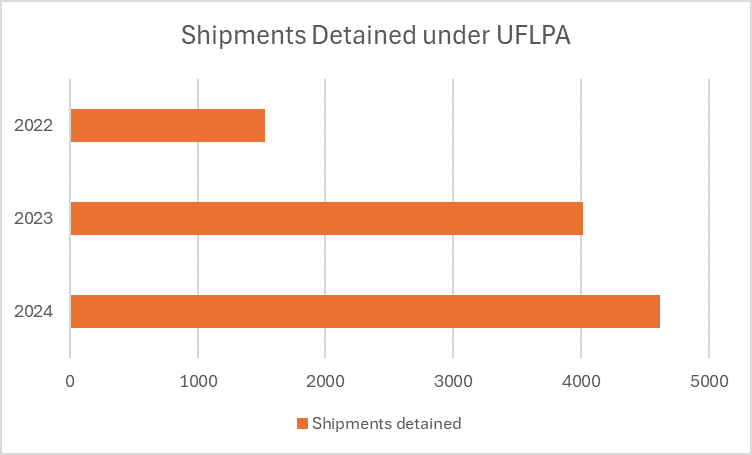
In 2024, the predominant types of shipments detained were electronics (accounting for over 56% of total detentions) followed by apparel and industrial materials. The leading countries of origin for UFLPA enforcement actions were Vietnam, Malaysia, and Thailand by a wide margin. These detentions can be contested by the importing party, and so far, approximately 46% of detentions in 2024 have been released.
2024 Commodity Risk Updates
The U.S. Department of Labor’s Bureau of International Labor Affairs (ILAB) has unveiled the 2024 edition of the List of Goods Produced by Child Labor or Forced Labor. This vital report, mandated by the Trafficking Victims Protection Reauthorization Act (TVPRA) of 2005, aims to raise awareness and drive action to combat child labor and forced labor worldwide.
This list serves as an input to CBP and other organizations’ risk assessment process pertaining to forced labor. By reviewing changes and updates to this list, along with other data sources, companies can improve their own supply chain due diligence and business partner vetting programs to minimize the potential of CBP enforcement actions under the UFLPA.
Key additions in the recently released 2024 addition of the TVPRA list include aluminum, silicon, and PVC originating in China. These commodities are significant because they are commonly used as inputs in the production of numerous end products ranging from automotive components to semiconductors to food packaging. A full list of 20204 additions is available in the table below.
| Country | Commodity |
| Belarus | Furniture, Lumber |
| Bolivia | Cattle, Coca, Lead |
| Burma | Fish, Garments |
| Central African Republic | Gold |
| Chad | Gold |
| China | Aluminum, Caustic Soda, Jujubes, Metallurgical Grade Silicon, Polyvinyl Chloride (PVC), Squid |
| Democratic Republic of Congo | Cobalt Ore |
| India | Recovered Metals, Shrimp, Sugarcane |
| Indonesia | Nickel |
| Kenya | Stones |
| Mauritius | Garments |
| Tanzania | Cattle, Rice, Stones |
| Venezuela | Gold |
| Zambia | Copper Ore, Manganese |
| Zimbabwe | Lithium |
What you can do
- Know the Regulations: Familiarize yourself with the forced labor regulations applicable to your industry and region. Understand the specific requirements outlined by U.S Customs and Border Protection (CBP).
- Conduct Regular Risk Assessments: Continuously assess your supply chain for the potential risk of forced labor. Identify vulnerable points in your supply chain where forced labor may occur and take proactive measures to mitigate these risks.
- Supplier Screening: Implement robust due diligence for vetting and monitoring your suppliers. Ensure they adhere to ethical labor practices and conduct regular audits to verify compliance.
- Training and Awareness: Educate your staff and key stakeholders about the signs of forced labor and the importance of compliance with regulations. Provide training on identifying and reporting any suspicious activities or behaviors within the supply chain.
- Implement Strong Contractual Agreements: Includes clauses in your contracts with suppliers that explicitly prohibit the use of forced labor. Clearly outline your expectations regarding labor practices and include provisions for termination of the contract in case of non-compliance.
- Engage in Collaborative Initiatives: Participate in collaborative efforts with industry peers, Non-Governmental Organizations (NGOs), and government agencies to address forced labor issues collectively. Joining forces with others in your industry can amplify your efforts and lead to more effective solutions.
- Regularly Review and Update Policies: Keep your policies and procedures regarding forced labor prevention up to date. Regularly review and revise these policies in response to changes in regulations, industry standards, and emerging risks.
- Encourage Transparency: Promote transparency within your supply chain by encouraging open communication with suppliers and workers. Provide channels for workers to report any concerns or grievances related to labor practices without fear of retaliation.
- Stay Informed: Stay up to date with the best developments in forced labor prevention, including new regulations, best practices, and emerging trends. Attend industry conferences, webinars, and training sessions to expand your knowledge and network with other professionals in the field.
By implementing these tips and integrating forced labor compliance measures into your supply chain management practices, you can help ensure that your company operates ethically and responsibly while minimizing the risk of involvement in forced labor practices.